

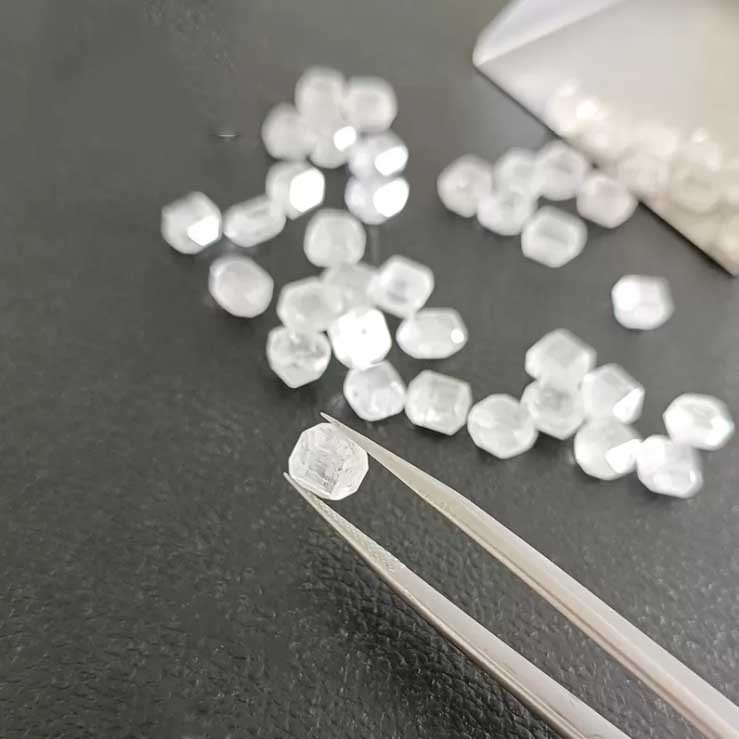
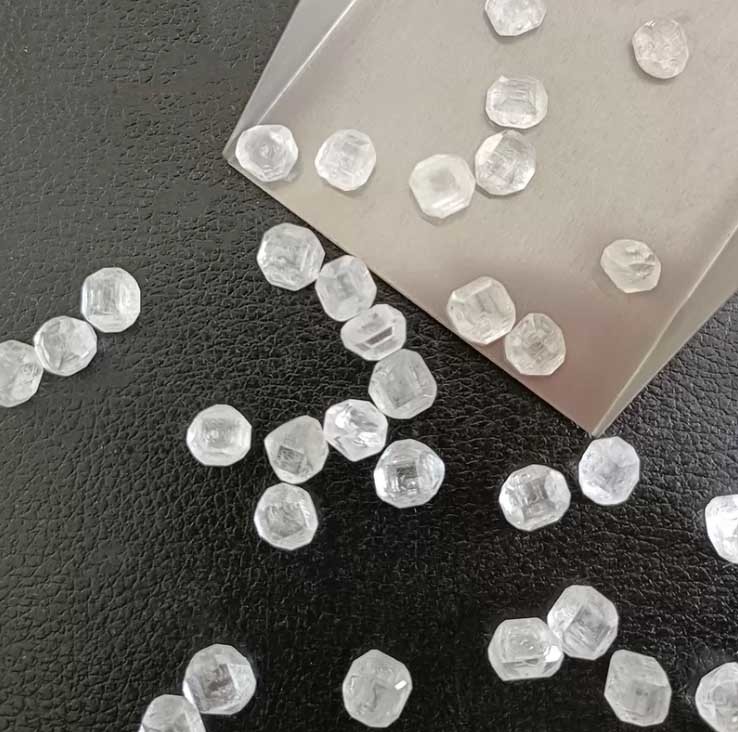
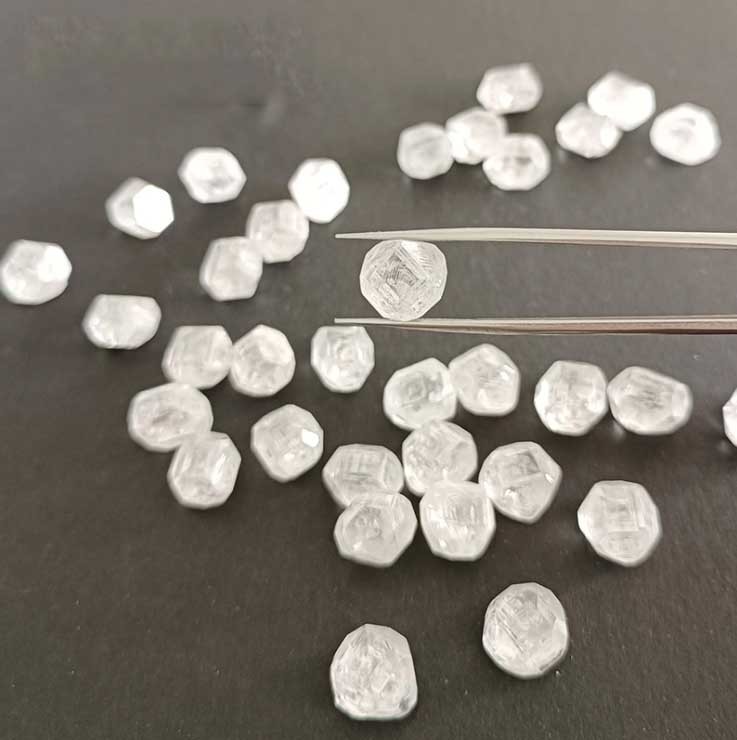
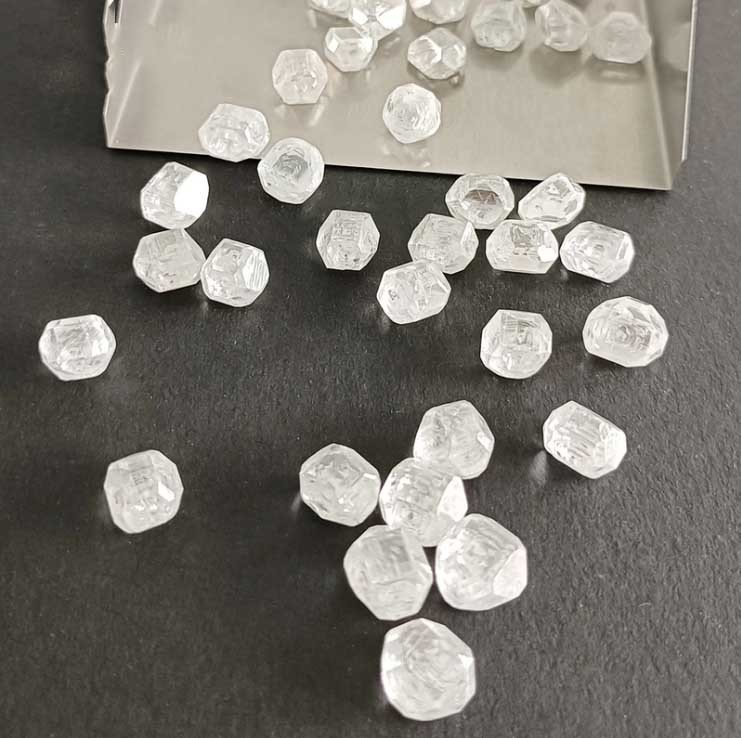
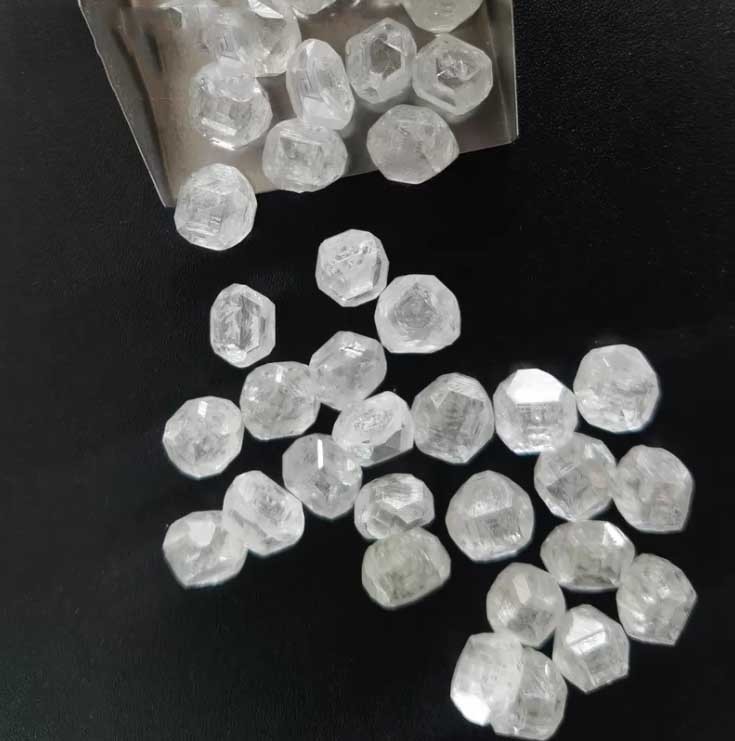
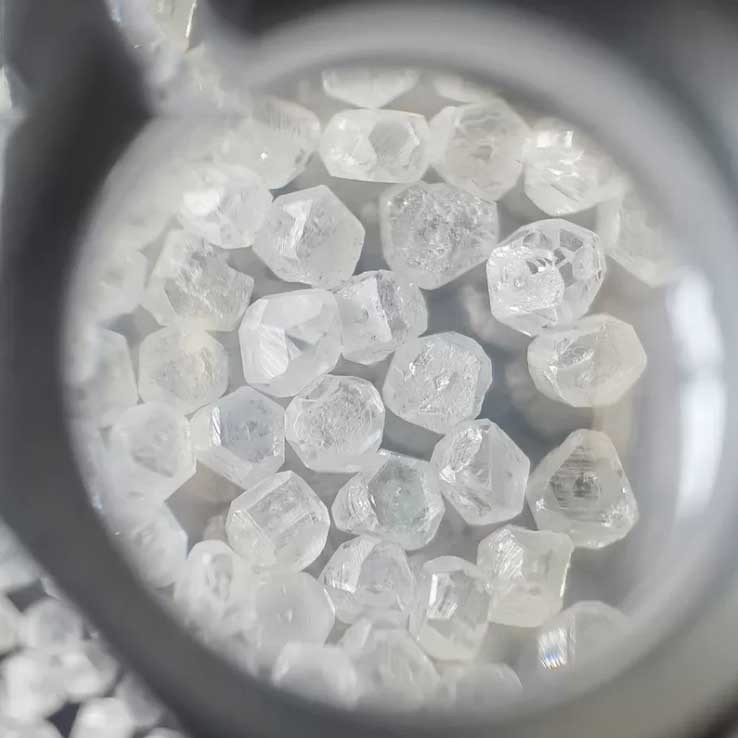
1Ct 2Ct HPHT Lab Grown Diamonds For Ring
CLARITY
VVS,VS
CARAT
2
COLOR
E,D,F
CUT
Good
Introduction
| Product Name :: | HPHT Lab Grown Diamond | Colour: | DEF |
|---|---|---|---|
| Clarity: | VVS VS | Carat Weight: | 1-2ct |
| Technology: | HPHT | Application: | Ring, Necklace, Earring |
| Payment Terms: | 100% Payment In Advance | Payment Mode: | T/T, Bank Transfer, PayPal, Western Union |
| Delivery Time: | 1-7 Working Days Depends On Quantity | Courier: | DHL, FedEx, UPS, TNT, EMS Etc |
| Packaging: | As Export Standard | Hardness: | Moh's 10 Scale |
| High Light: |
1Ct HPHT Lab Grown Diamonds,2Ct HPHT Lab Grown Diamonds,HPHT 1ct lab grown diamond |
||
Lab Created Diamonds Description
Lab-grown diamonds are also known as lab-made diamonds, synthetic diamonds and synthetic diamonds. There are two main ways to the growth of diamond manufacturing laboratory: CVD and HPHT.
"True" for culturing diamond is synthesized diamond: artificial cultivation diamond is through modern technology in the growth environment of laboratory simulation of natural diamond growth of diamond, and the properties of natural diamond, is a true diamond. Laboratory synthetic diamonds date back to the 1950s. There are two main methods for diamond production and laboratory manufacturing: high temperature and pressure (HPHT) and chemical meteorological deposition (CVD). Compared with natural diamond, lab created diamond in quality (provide bigger and more beautiful diamond), cost (only a third of the natural diamond prices), environmental protection (lab created diamond, save water, reduce the loss of land carbon emissions) have obvious advantages, etc. At present, diamonds grown in the laboratory have obtained IGI, GIA and NGTC national testing certificates.
The so-called "lab created diamonds", also called laboratory breeding diamond, diamond is also called the growth, called synthetic diamonds in the national standard. Lab-grown diamond products are comparable with natural diamond in terms of crystal structure integrity, transparency, refractive index and dispersion. As emerging in the field of diamond consumption choice, laboratory grown diamond products can be used to make diamond ring, necklace, earrings and other diamond accessories and other fashion goods.
Parameters of Synthetic HPHT Man Made Diamonds
| Product Name | Synthetic (Lab created) diamond |
| Material | Lab-grown |
| Color | D-H |
| Shape | Round |
| Technology | HPHT |
| Diamond Cut | Uncut |
| Payment Terms | 100% Payment In Advance |
| Diamond Carat Weight | 1CT-2CTS |
| Grade | VVS-SI |
| Shipping way | DHL, FedEx, SF Express, UPS, EMS, TNT etc |
| Payment Methods | T/T, PayPal, Western Union, Bank Transfer |
| Used | Jewelry (necklace,ring,earring) |
| Application | For Cutting Lab Grown Loose Diamonds |
| Place Of Origin | Kaifeng, China |
Characteristics Of Lab Created Diamonds
Lab grown diamonds in the chemical, optical and structure are the same as the mining of diamonds. What does that mean?
| The Difference Between Lab Diamond And Natural Diamond | |||
| Attribute | Lab-Created Diamonds | Natural diamond | Distinction |
| Chemical composition | C(carbon) | C(carbon) | No |
| Refractive index | 2.42 | 2.42 | No |
| Relative density | 3.52 | 3.52 | No |
| Dispersion | 0.044 | 0.044 | No |
| Hardness value | 90 GPA | 90 GPA | No |
| Thermal conductivity | 2*103 W/M/K | 2*103 W/M/K | No |
| Thermal property | 0.8*10-6 K | 0.8*10-6 K | No |
| Light transmittance | DEEP UV TO FAR TR | DEEP UV TO FAR TR | No |
|
Resistivity |
1016 OHM-CM |
1016 OHM-CM |
No |
|
Compressibility |
8.3*10-13 M2/N |
8.3*10-13 M2/N |
No |
Carat 1
The size of a diamond is proportional to its carat weight. When rough diamonds are cut and polished into finished diamonds, up to 2/3 of the total carat weight may be lost. Since larger rough gems of high quality are found less frequently than smaller rough gems of high quality, a single two carat diamond will be more expensive than two one-carat diamonds of the same quality.
Color H
A diamond’s color is an important element of its quality. In a white diamond, the less body color present, the greater the value of the diamond. The GIA grades diamonds on a scale of D (colorless) to Z (noticeable color).
The predominant color you see in a diamond is yellow, which is caused by the trace element nitrogen.
Clarity SI1
Clarity refers to the presence of imperfections, flaws and blemishes inside or on the surface of a diamond.
The GIA grades diamond clarity under 10X magnification on a scale that ranges from Flawless (FL) to I2-3 (Included). Diamonds with the least amount of flaws having the highest clarity grading.
A diamond’s clarity has a significant impact on its value.
Cut Very Good
The cut of a diamond influences how effectively it reflects light. Well-cut diamonds appear fiery and brilliant and allow light to enter the stone and be reflected around the facets before exiting the stone through the top. Poorly-cut diamonds can appear lifeless and dark, despite their clarity or color grade.
Not only do well-cut diamonds appear more brilliant, they also tend to appear larger than other diamonds of the same carat weight.
Related Products
Message
Contact Us
Telephone : +86-371 - 22280678
Mail : sd10@bescosa.net
Add : Intersection of Eighth Street and
Longhai Fifth Road, Kaifeng City, Henan Province
Copyright © Kaifeng Baseco Superhard Materials Co., Ltd.
Powered by : www.300.cn Business Supported IPV6
Copyright © Kaifeng Baseco Superhard Materials Co., Ltd.
Powered by : www.300.cn Business Supported IPV6