

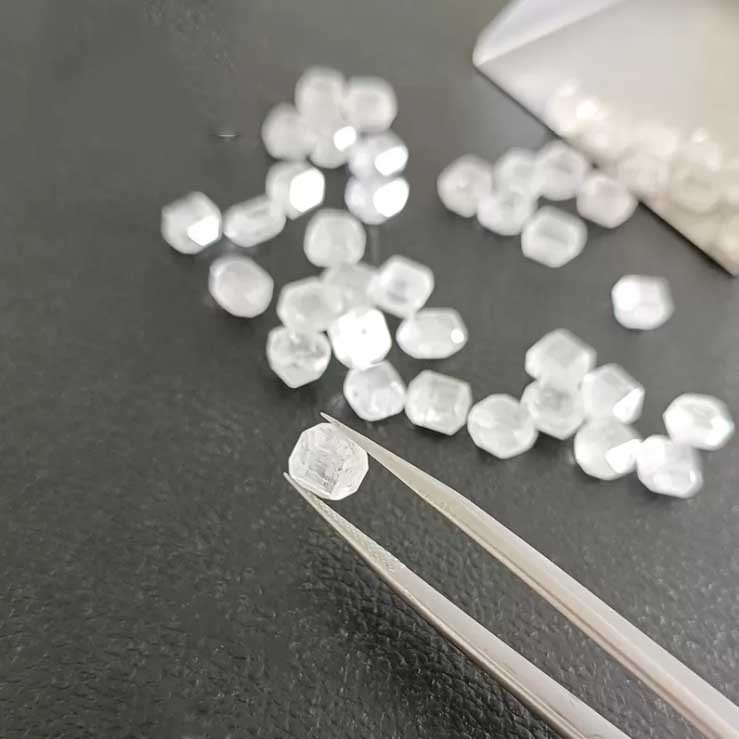
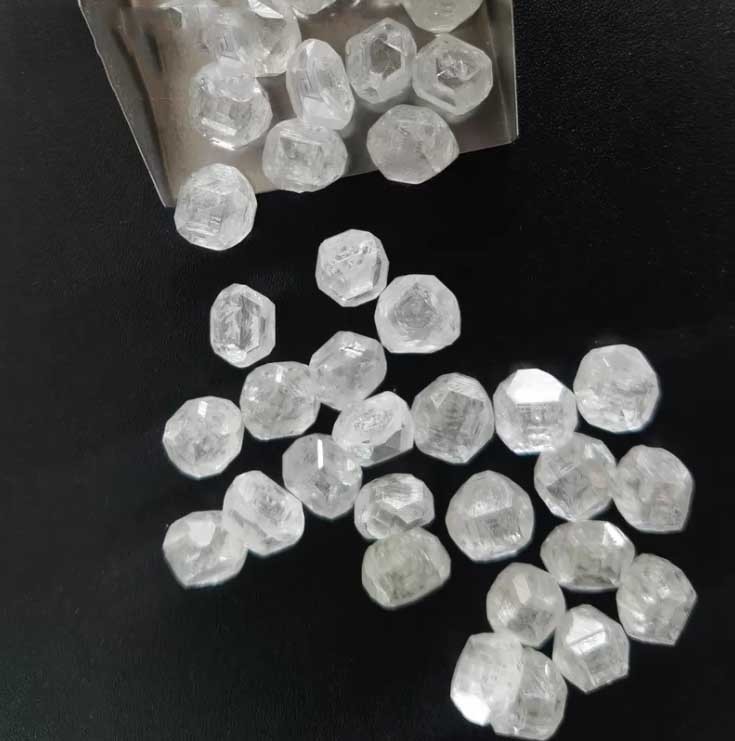
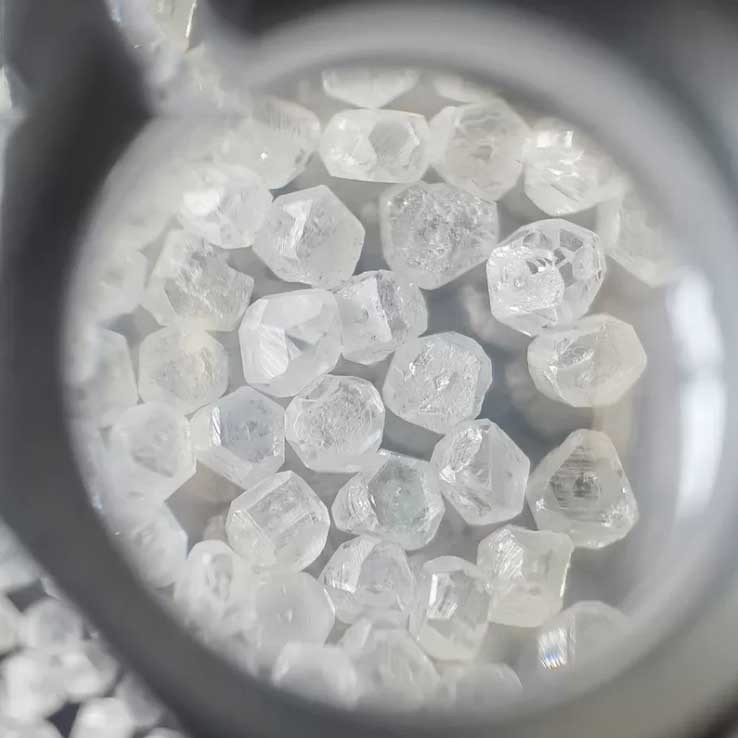
3.2mm Yellow Mono Synthetic HPHT Industrial Diamonds
COLOR
Yellow
Introduction
| Product Name: | Synthetic Monocrystalline Diamonds | Brand: | Besco |
|---|---|---|---|
| Grade: | Low | Assortment: | Good |
| Color: | Yellow | Size: | 3.2mm |
| Technology: | HPHT | Shape: | Rough |
| Usage: | Abrasives And Diamond Tools | Component: | Carbon |
| Hardness: | Moh's 10 Scale | Available Type: | HPHT |
| Place Of Origin: | kaifeng, China | Payment Terms: | 100% Payment In Advance |
| Payment Mode: | T/T, Bank Transfer, PayPal, Western Union | Delivery Time: | 1-7 Working Days Depends On Quantity |
| Courier: | DHL, FedEx, UPS, TNT, EMS Etc | Packaging: | As Export Standard |
| Customization: | Welcome | Polish: | None |
| Symmetry: | None | Sample Order: | Welcome |
| Treatments Applied: | None | Enhancement: | None |
| High Light: |
Yellow HPHT Industrial Diamonds,3.2mm HPHT Industrial Diamonds,HPHT Mono Synthetic Diamonds |
||
Synthetic HPHT Industrial Diamonds Description
Lab diamonds are real diamonds. Carbon is the main element of natural and laboratory-grown diamonds. The chemical and physical properties of synthetic diamonds are same as natural diamonds in terms of hardness, thermal conductivity, and strength.
High temperature and high pressure (HPHT) and chemical vapor deposition (CVD) are the two most commonly used growth methods in synthetic diamonds industrial. High temperature and high pressure exert intense heat (about 1500 degrees Celsius, or 2700 degrees Fahrenheit) and pressure (1.5 million pounds per square inch) on the diamond seed and the carbon atoms surrounding it. Chemical vapor deposition, on the other hand, uses less heat and pressure, but introduces a mixture of chemical gases, which decomposes and hardens into crystalline carbon atoms.
Diamond is a kind of mineral composed of carbon element, which is allotropic body of carbon element. Diamond is the hardest material in nature. Diamond has a wide range of uses, such as: Arts and crafts, industrial cutting tools. Graphite can form synthetic diamond at high temperature and high pressure.
Diamond is a non-metallic mineral composed of natural element carbon (c). Except diamond, other transparent gemstones are minerals composed of many elements.
The hardness of diamond in 10 representative minerals of "Mohr hardness" is 10, which is the hardest. And in the "absolute hardness" measured in the "NOP" value (unit: kg / mm), diamond is 8000, corundum 2000, quartz (or crystal) 1000, diamond is also the hardest, so it is the hardest solid material in nature.
Parameters of HPHT Monocrystalline Diamonds
| HPHT Monocrystalline Diamonds | |
| Brand Name | Besco |
| Name | Synthetic Monocrystalline Diamonds |
| Diamond Color | Yellow |
| Diamond Clarity | SI-I |
| Diamond Size | 3.2mm |
| Diamond Cut | Uncut |
| Polish | None |
| Symmetry | None |
| Technology | HPHT |
| Mesh Size | 8/10 plus |
| Shape | Rough |
| Diamond Enhancement | None |
| Available Type | HPHT |
| Diamond Certificate | None |
| Application | Diamond tools making |
| Place Of Origin | Kaifeng, China |
| Delivery Time | 1 - 15 Working Days Base on Order Quantity |
| Payment Terms | 100% Payment In Advance |
| Payment Methods | T/T, PayPal, Western Union, Bank Transfer |
| Shipping way | DHL, FedEx, SF Express, UPS, EMS, TNT etc |
| M.O.Q | Negotiable |
| Diamond Type | Synthetic(lab created) |
| Location | Kaifeng China |
| Treatments Applied | None |
| Fire Dispersion | 0.044(Same as Natural Diamond) |
| Brilliance Refraction Index | 2.42(Same as Natural Diamond) |
| Relative Density | 3.52(Same as Natural Diamond) |
| Chemical Composition | Carbon(Same as Natural Diamond) |
| Moh's Hardness | 10(Same as Natural Diamond) |
Synthetic HPHT Industrial Diamonds Introduction
Natural diamonds are created by nature and are the result of high temperature and pressure formed over billions of years. The Lab Grown Diamonds are produced in the laboratory, usually in a few weeks. The chemical difference between the two is same.
So how do you distinguish between Lab Grown Diamonds and natural diamonds?
There is no obvious difference between the Lab Grown Diamonds and natural diamonds. Even professional gemologists need special equipment to identify them. By zooming in, professionals will be able to discern subtle contrasts in diamond inclusions grown and mined in the laboratory.
| The Difference Between Lab Diamond And Natural Diamond | ||
| Properties | Earth Mined | Lab Created |
| Guaranteed Conflict-Free | No | Yes |
| Hardness (MOHS) | 10 | 10 |
| SP3 Carbon Diamond Bonds (%) | 100% | 100% |
| Internal Crystal Structure | Face-Centered Cubic | Face-Centered Cubic |
| Hardness Comparable | 2.42 | 2.42 |
| Relative Diversity | 3.52 | 3.52 |
| Color Diffusion | 0.044 | 0.044 |
| Color | Various Grades | K to D grades |
| Price | $$$$$ | $$$ |
Carat 1
The size of a diamond is proportional to its carat weight. When rough diamonds are cut and polished into finished diamonds, up to 2/3 of the total carat weight may be lost. Since larger rough gems of high quality are found less frequently than smaller rough gems of high quality, a single two carat diamond will be more expensive than two one-carat diamonds of the same quality.
Color H
A diamond’s color is an important element of its quality. In a white diamond, the less body color present, the greater the value of the diamond. The GIA grades diamonds on a scale of D (colorless) to Z (noticeable color).
The predominant color you see in a diamond is yellow, which is caused by the trace element nitrogen.
Clarity SI1
Clarity refers to the presence of imperfections, flaws and blemishes inside or on the surface of a diamond.
The GIA grades diamond clarity under 10X magnification on a scale that ranges from Flawless (FL) to I2-3 (Included). Diamonds with the least amount of flaws having the highest clarity grading.
A diamond’s clarity has a significant impact on its value.
Cut Very Good
The cut of a diamond influences how effectively it reflects light. Well-cut diamonds appear fiery and brilliant and allow light to enter the stone and be reflected around the facets before exiting the stone through the top. Poorly-cut diamonds can appear lifeless and dark, despite their clarity or color grade.
Not only do well-cut diamonds appear more brilliant, they also tend to appear larger than other diamonds of the same carat weight.
Related Products
Message
Contact Us
Telephone : +86-371 - 22280678
Mail : sd10@bescosa.net
Add : Intersection of Eighth Street and
Longhai Fifth Road, Kaifeng City, Henan Province
Copyright © Kaifeng Baseco Superhard Materials Co., Ltd.
Powered by : www.300.cn Business Supported IPV6
Copyright © Kaifeng Baseco Superhard Materials Co., Ltd.
Powered by : www.300.cn Business Supported IPV6